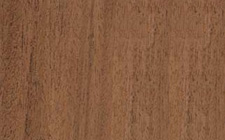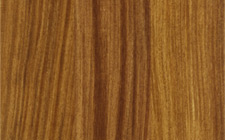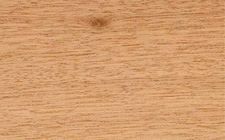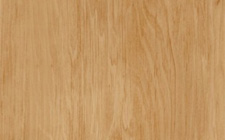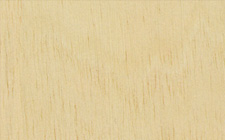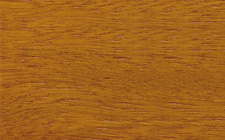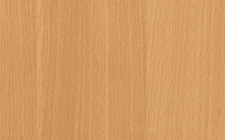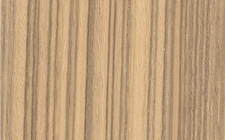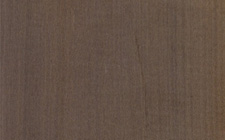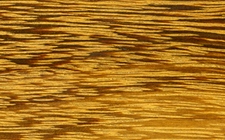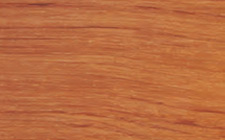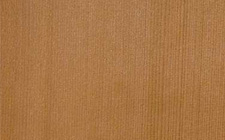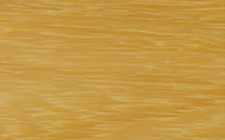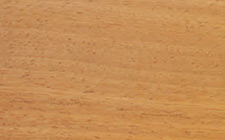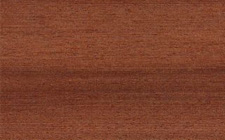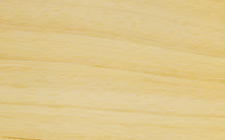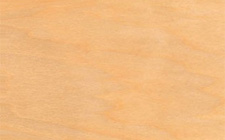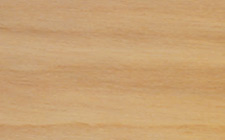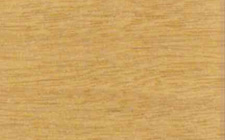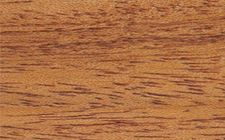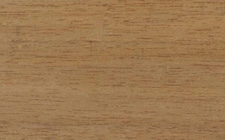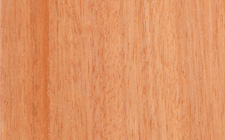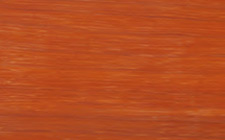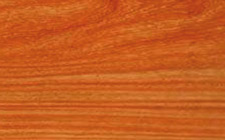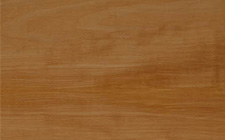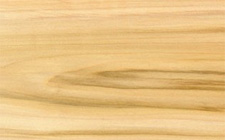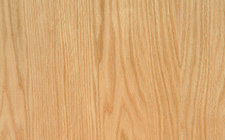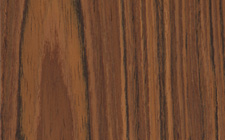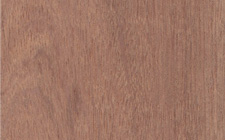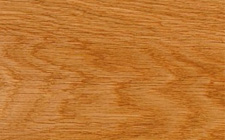
Limba / Frake
Botanical name
Terminalia superba
Origin
Africa
Other names
Azinii, Akom, White Afara, Noyer du Mayombe, Ofram, Afara, N'ganga, Kojagei, Limbo, Korina

WOOD DESCRIPTION
| Color: |
light yellow |
| Sapwood: |
not demarcated |
| Texture: |
medium |
| Grain: |
straight or interlocked |
| Interlocked grain: |
slight |
| Note: |
Sometimes brittleheart. Some logs have a black greyish heartwood, more or less veined. |
PHYSICAL, MECHANICAL AND ACOUSTIC PROPERTIES
|
(*: at 12% moisture content, with 1 MPa = 1 N/mm²) Musical quality factor: 115,6 measured at 2740 Hz |
||||||||||||||||||||||||||||||||||||||||
NATURAL DURABILITY AND TREATABILITY
| Funghi (according to E.N. standards): |
class 4 - poorly durable |
| Dry wood borers: |
susceptible - sapwood not or slightly demarcated (risk in all the wood) |
| Termites (according to E.N. standards): |
class S - susceptible |
| Treatability (according to E.N. standards): |
class 2 - moderately permeable |
| Use class ensured by natural durability: |
class 1 - inside (no dampness) |
| Species covering the use class 5: |
No |
| Note: |
This species is listed in the European standard NF EN 350-2. Preservative treatment is sometimes difficult due to a variable permeability (low to good). |
SAWING, MACHINING AND ASSEMBLING
| Blunting effect: |
normal |
| Sawteeth recommended: |
ordinary or alloy steel |
| Cutting tools: |
ordinary |
| Peeling: |
good |
| Slicing: |
nood |
| Note: | Internal stresses in some logs (usually timbers from plantation). Sometimes, blunting effect quite high. |
| Nailing / screwing: |
good |
| Gluing: |
correct |